Compost Too Wet and Smelly? Restore Air Before Adding More Scraps
Diagnose a soggy compost pile, mix in dry structural material, manage rain and check progress without treating every cold pile as a nitrogen shortage.
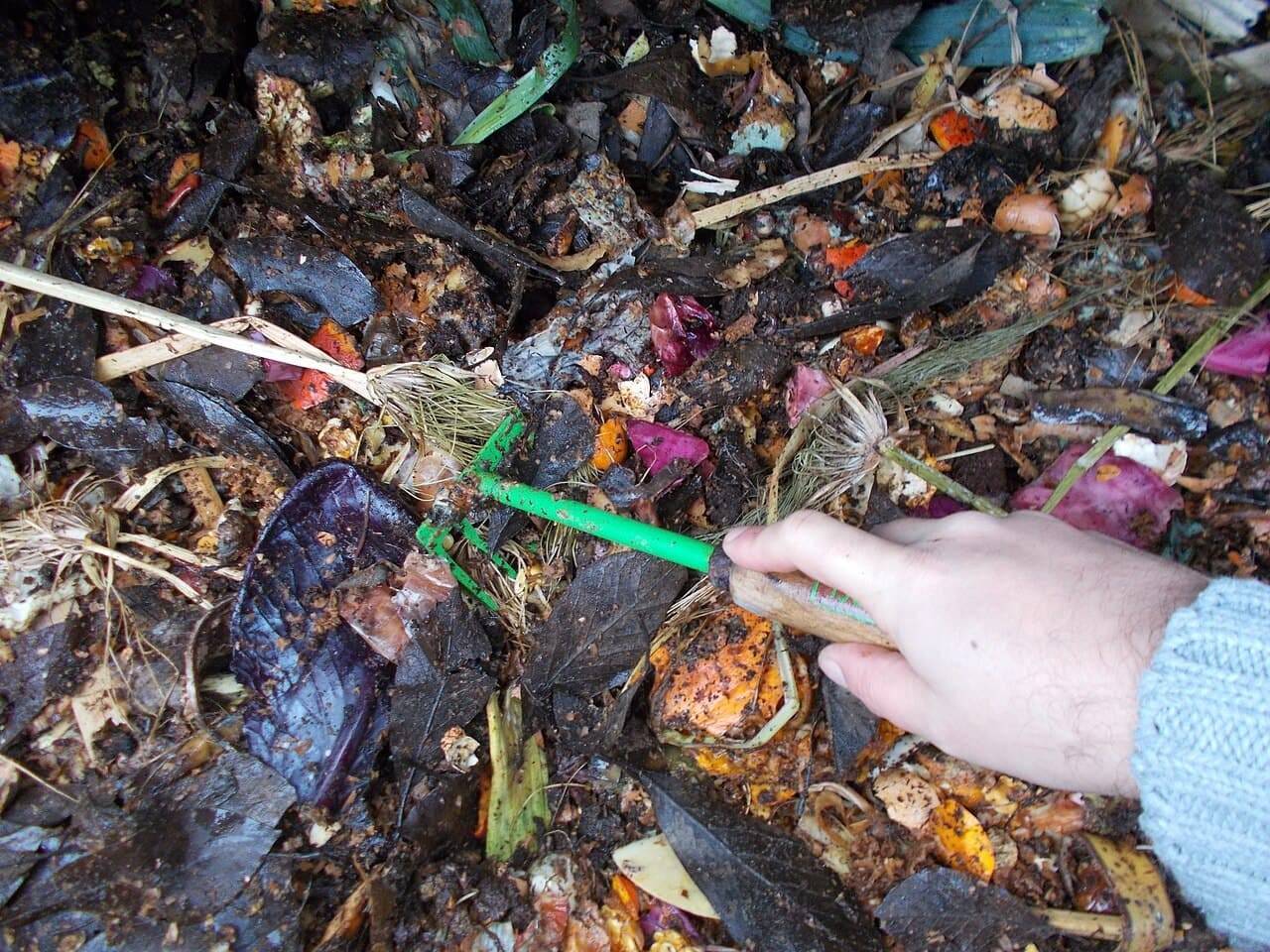
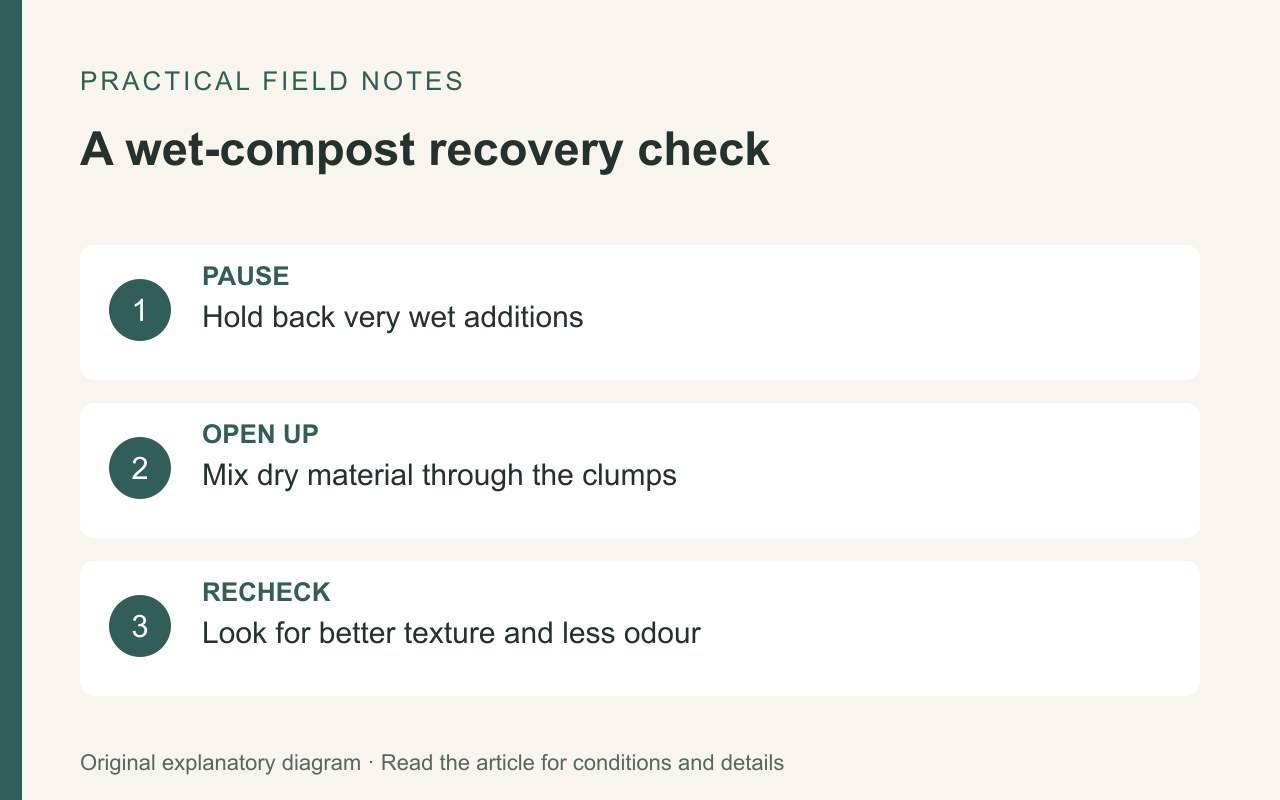
A wet, unpleasant-smelling compost pile often needs more air and a better physical structure before it needs another load of scraps. Pause very wet additions, check where water is coming from, and mix suitable dry material through dense clumps. Do not respond to every slow or cold pile by adding more nitrogen-rich ingredients: a soggy pile can already have plenty of them.
This guide is for ordinary backyard composting of suitable plant-based materials. It is not a troubleshooting method for sewage, unknown contaminated waste or a commercial composting operation.
Confirm the problem beyond the surface
Look at a representative section of the pile using a fork or another suitable tool. Is the material loose enough to mix, or does it form wet mats? Is water collecting beneath the bin? Has rain been entering for several days, or have you recently added a thick layer of fresh grass or kitchen scraps?
Record what you see before changing the recipe. “Wet underneath after three days of rain” points to a different practical problem from “one dense layer of grass in an otherwise dry pile.” A single scoop from the outside can miss the centre, so avoid deciding from the most convenient handful alone.
Understand why wetness can reduce air
Cornell Cooperative Extension's moisture fact sheet explains that too much water can fill spaces needed for airflow. It also notes that grass clippings release water as they break down, and that coarse dry material can help create a more open structure. Something that did not look dripping wet when it went into the bin can still contribute to a soggy mass later.
This is why opening the lid for an afternoon may not solve a densely packed centre. The problem can be inside the material, not only in the air above it. Aim to change the texture of the mix rather than merely drying its top layer.
Pause and prepare suitable dry ingredients
Set aside dry leaves, an appropriate amount of plain shredded cardboard or other suitable brown material you can actually mix through the pile. Avoid coated packaging, plastic tape and materials whose suitability you cannot establish. Keep the scale manageable: a few dry leaves placed on top are unlikely to change a large, compressed wet layer beneath them.
For the broader ingredient distinction, our compost greens-and-browns guide explains why categories are a starting point rather than an exact household formula. In this recovery job, structure and moisture matter alongside the names of the ingredients.
Mix through the clumps rather than making a dry roof
Work in sections and separate dense mats as you incorporate dry structural material. Use tools suited to your bin and physical ability; do not climb into a container or strain to lift an entire compacted mass. A modest pile that you can manage safely is more useful than an ambitious one you cannot mix.
Illinois Extension's troubleshooting advice recommends turning a bad-smelling pile and adding dry material when it is too wet. Check the result as you work. The aim is a more open mixture, not a pile so dry that decomposition simply encounters a different obstacle.
Deal with the water source
If rain is the main contributor, use a suitable cover or bin lid while preserving the ventilation intended by the design. Check whether runoff from a roof or nearby hard surface is being directed into the pile. A cover does little if water continues to enter from the side or collect underneath.
Think about where drainage will go. Do not solve a soggy-bin problem by deliberately directing liquid onto a path, into a storm drain or toward a neighbour. If the location routinely floods, relocation to an appropriate site may be more effective than repeatedly adding dry material after each storm.
Reassess before feeding the pile again
| Observation after the adjustment | What to do next |
|---|---|
| The material remains dense and sodden | Check whether dry material reached the wet sections and whether water is still entering |
| Texture is more open and odour is easing | Resume suitable additions gradually while watching the mix |
| The pile is dry and inactive | Reconsider moisture instead of adding still more dry material |
| The pile is damp and earthy but cool | Consider its size, season and materials rather than assuming that wetness remains the problem |
Use dates in your notes, especially if several people contribute scraps. A short record of additions and adjustments makes it easier to recognise the same pattern next time. You do not need to weigh every kitchen peel to notice that all the wet material has been arriving together.
Keep the recovery within home-composting limits
Maryland Extension's composting guidance distinguishes appropriate backyard materials and emphasises turning and balancing food and yard waste. Do not use this recovery process as proof that a small home pile has reached sanitising temperatures. Diseased plants, problematic weeds, animal waste and other unsuitable inputs need advice specific to their disposal.
A pile that no longer smells unpleasant is easier to live with, but that alone does not show that the compost is finished. Let the material continue through an appropriate composting and maturation process before using it. Restoring air and a workable texture is the next step in managing the pile, rather than an instant shortcut to a bag of ready compost.