How to Rewet Dry Potting Mix When Water Runs Straight Through
Distinguish water-repellent potting mix from a wet root zone, rehydrate a suitable draining pot gradually, and check the result before watering again.
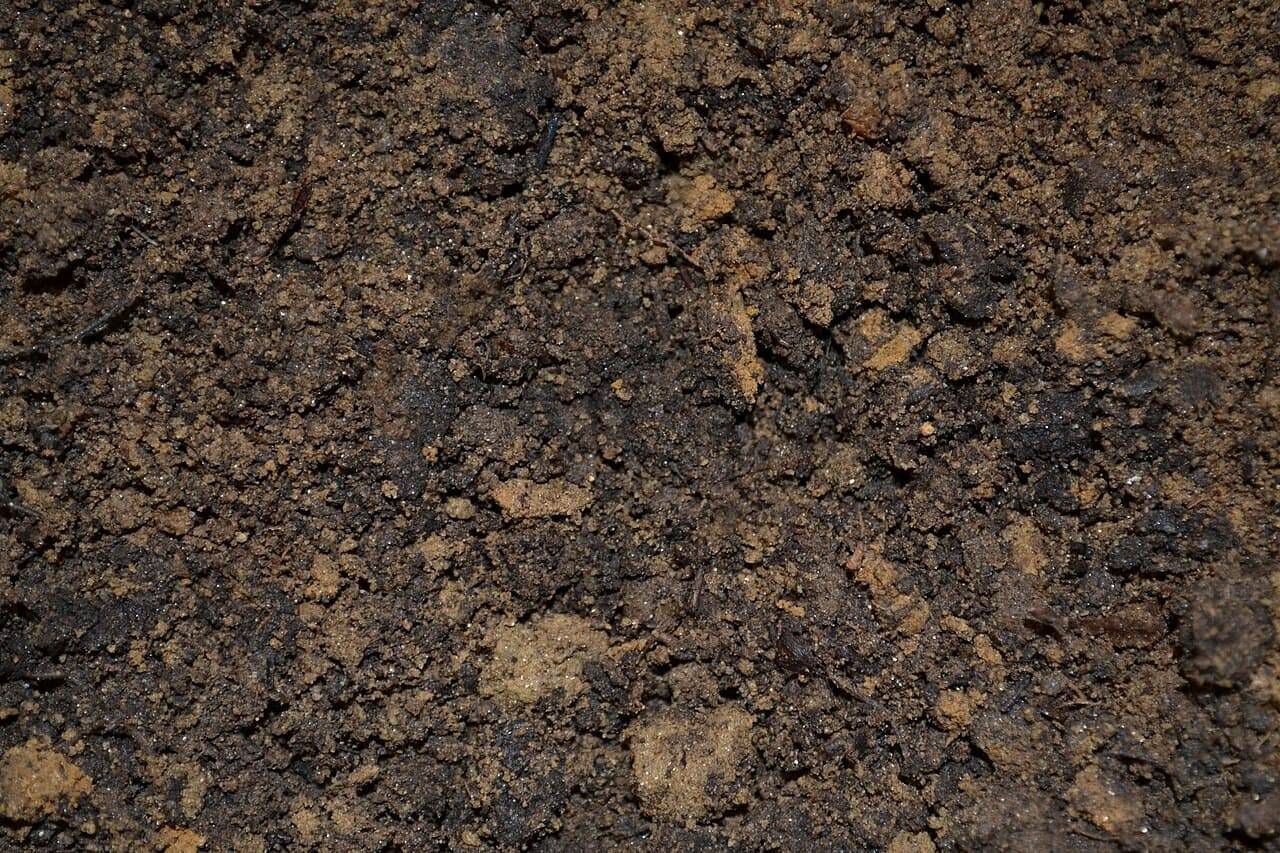
When water runs straight through a pot, check whether the centre of the potting mix is actually getting wet. Very dry mix can repel water, allowing it to travel along a gap or a few easy channels instead of moistening the root zone evenly. Rapid runoff is therefore not proof that a plant has received a thorough watering.
The first step is to distinguish that situation from a pot that is already too wet. Do not soak a heavy, saturated container simply because the plant is drooping. Similar-looking leaves can sit above very different root conditions.
Confirm that the mix is dry inside
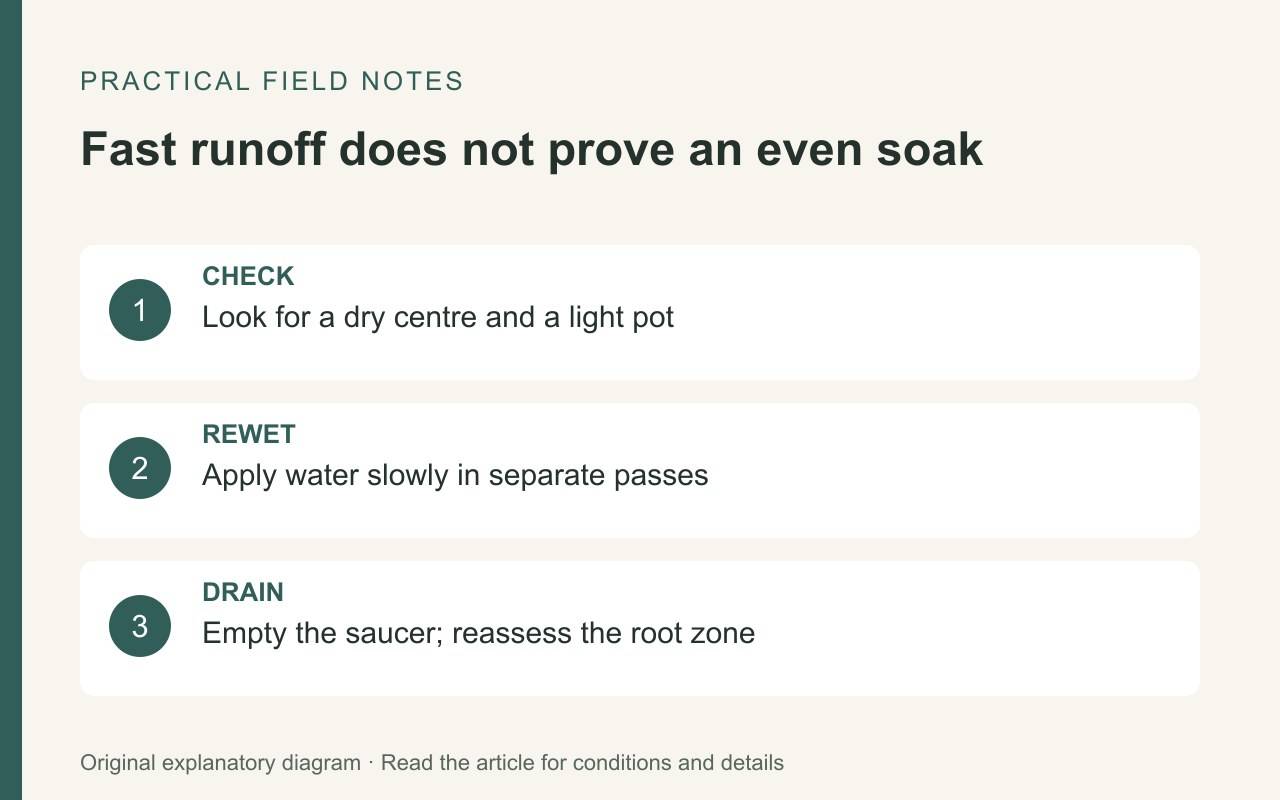
Look at the container and the material below the surface. A pot that remains unusually light after watering, or mix that is damp in one place but dry in another, deserves a closer check. If you can do so without damaging the plant, inspect a small area below the surface with a finger. Avoid repeatedly disturbing delicate new roots to investigate every part of the pot.
Virginia Cooperative Extension explains that dry potting soils, especially peat- or bark-based mixes, can become water-repellent. Its practical checks include pot weight and moisture in the centre. The point is to establish what the water did, rather than judging success by how much appeared in the saucer.
Keep drainage separate from water absorption
A container needs an exit for excess water. A dry root ball also needs the water to reach it in the first place. Those two requirements can coexist. Blocking drainage holes to hold more water is not the same as correcting a mix that has become hard to wet.
Maryland Extension's guide to container growing media explains how air and water move through pore spaces, and why a suitable growing medium matters in a small container. For the wider choice between ingredients, use our potting-mix versus garden-soil guide. A watering adjustment cannot make every unsuitable material into a dependable container mix.
Try slow applications before a bigger intervention
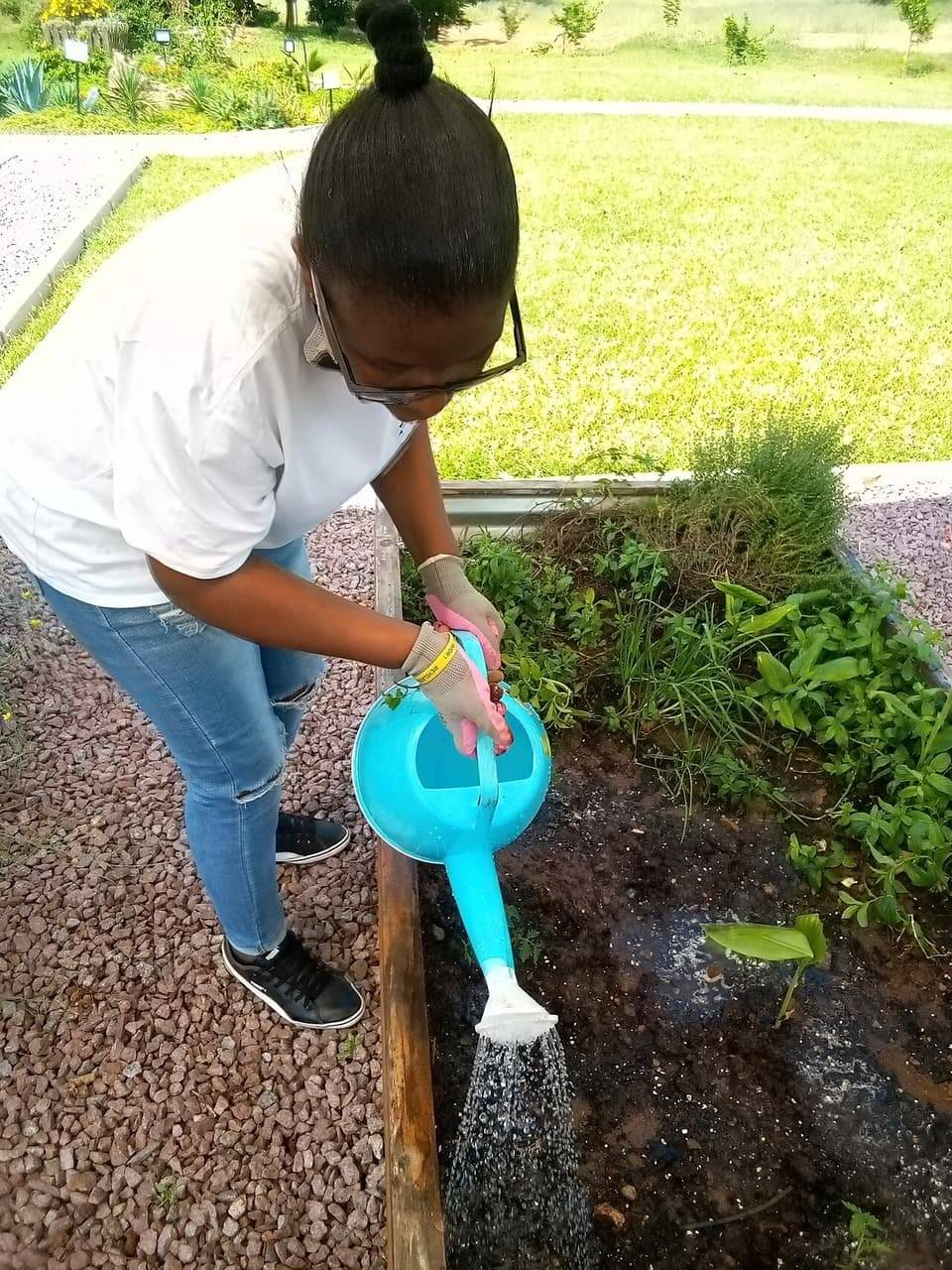
For a suitable plant in a pot with drainage, apply water slowly over the surface of the mix, allow it time to absorb, and check again before another pass. Virginia Extension describes two or three slow applications as a way to hydrate dry potting soil. Stop treating this as a race to produce the largest stream from the bottom of the pot.
Use a sink, tray or other setup that can contain the runoff safely. Remove a growing pot from a decorative outer container when necessary so you can see whether it drains. Keep electrical equipment away from the wet area and support any pot that is awkward to lift. These practical arrangements make it easier to watch the result without rushing.
Consider bottom watering only when the setup suits it
Bottom watering can be an option for a draining container and a plant suited to that method. Place the pot in a shallow basin of water and monitor absorption; the pot must have holes through which water can enter. The same Virginia publication describes a monitored period of roughly 15–30 minutes, sometimes longer for water-repellent mix, and warns against leaving houseplants in water for extended periods beyond an hour.
Treat the clock as a prompt to check, not a guarantee that the root ball has become uniformly moist. Empty the basin afterward and let the container drain. Do not leave a planted pot soaking overnight as a universal recovery treatment.
Loose unused mix is a different problem
If the material is not yet around living roots, you have more freedom to moisten and mix it in a separate container before potting. An Ask Extension answer about reclaiming hydrophobic potting soil discusses soaking loose material. That is not a reason to give a planted container the same treatment without considering its roots, drainage and species.
Moisten an appropriate amount, mix it thoroughly and check its consistency before using it. Follow the product's instructions where provided. There is no need to add dishwashing liquid or boiling water to a planted pot. If a wetting product is being considered, it must be labelled for the actual horticultural use; a household cleaning product is not an interchangeable substitute.
Check the outcome after draining
| Check | What you want to learn |
|---|---|
| Pot weight | Has it changed in a way that suggests water was retained? |
| Moisture below the surface | Is the centre less dry, rather than only the edges being wet? |
| Saucer or outer pot | Has collected water been removed? |
| Plant condition afterward | Is there a useful trend, or does the problem need another explanation? |
A plant that continues to wilt despite an adequately moist root zone needs reassessment. Repeating the soak may make the problem worse. Look again at the roots, container, light and plant identity rather than assuming that every decline means thirst.
Make the next watering decision from the root zone
Once the mix is properly wetted, use the plant's requirements and the actual conditions to decide when it needs water again. Record how quickly this particular container dries in its current location. The answer can change after a move, a shift in the weather or a change in growth.
Our guide to watering container plants without guessing covers the ongoing observation routine. Rewetting solves an immediate absorption problem; the longer-term aim is to stop alternating between an extremely dry root ball and a pot that is kept permanently saturated.