Why Basil Leaves Turn Yellow: Check the Pot Before Feeding
Check moisture, drainage, nutrients and leaf patterns when basil turns yellow. Learn when a watering adjustment is reasonable and when disease needs diagnosis.
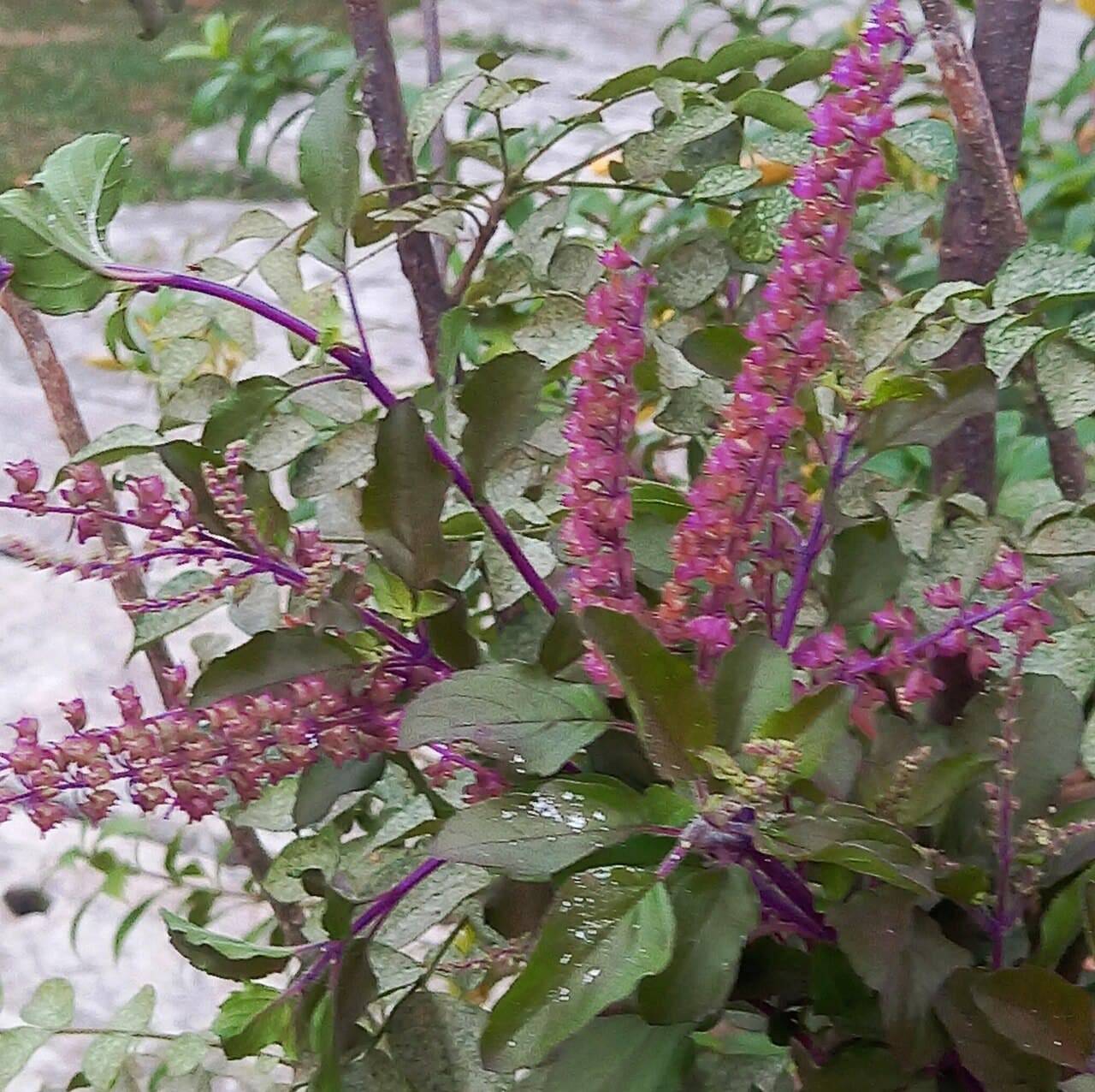
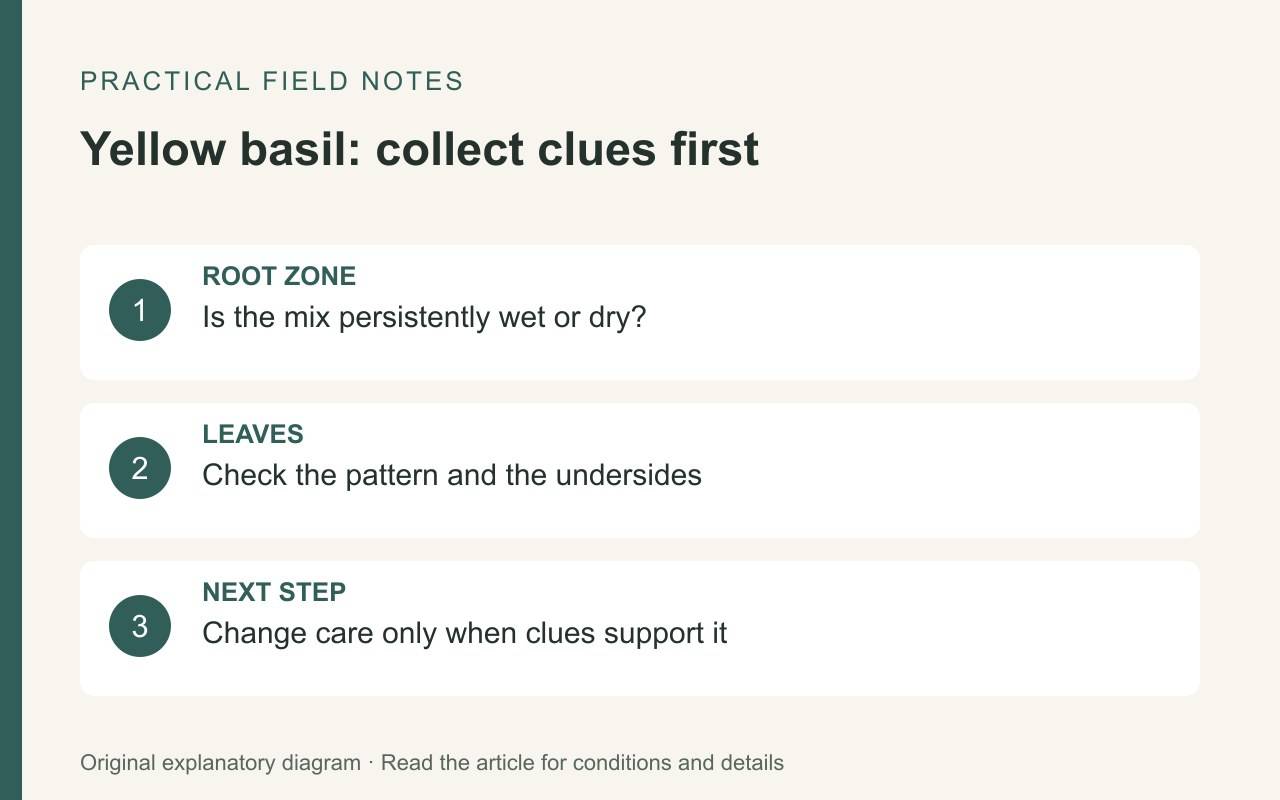
Yellow basil leaves are a reason to inspect the plant, not an automatic instruction to add fertiliser. Check the root zone, drainage and leaf pattern first. A pot that stays wet, a plant that has dried out and a plant with a leaf disease need different responses. Changing all three parts of the care routine at once can make the original problem harder to understand.
The photographs here show basil for context. They are not photographs of a diagnosed diseased plant, and matching your leaf to a general description cannot establish a diagnosis on its own.
Make a useful observation before making a change
Start with four questions: where is the yellowing, when did it begin, what does the potting mix feel like below the surface, and what changed recently? Note whether you moved the plant, changed its watering routine, repotted it or began feeding. Include rain if the pot lives outside; a watering can is not the only way it receives water.
Take a photograph of the whole plant, one affected leaf and its underside. Keep the date. Those views are more useful for following the problem or asking for help than a tightly cropped picture of the most dramatic leaf. They also let you distinguish damage that was already present from a new change after adjusting care.
Check whether the roots have been staying wet
In a basil case assessed by Maryland Extension, the possible causes included nutrient shortage, overwatered roots and ageing potting mix. The advice emphasised drainage and the loss of air spaces as old mix compresses. That is a useful reminder to examine the growing conditions rather than treating every pale leaf as a request for more feed.
Check that the growing container has working drainage holes and is not standing in collected water inside a decorative outer pot. Feel the mix beneath the dry-looking surface. If it remains wet and the pot is consistently heavy, pause before adding water. For the normal care sequence, revisit our guide to growing basil in a pot.
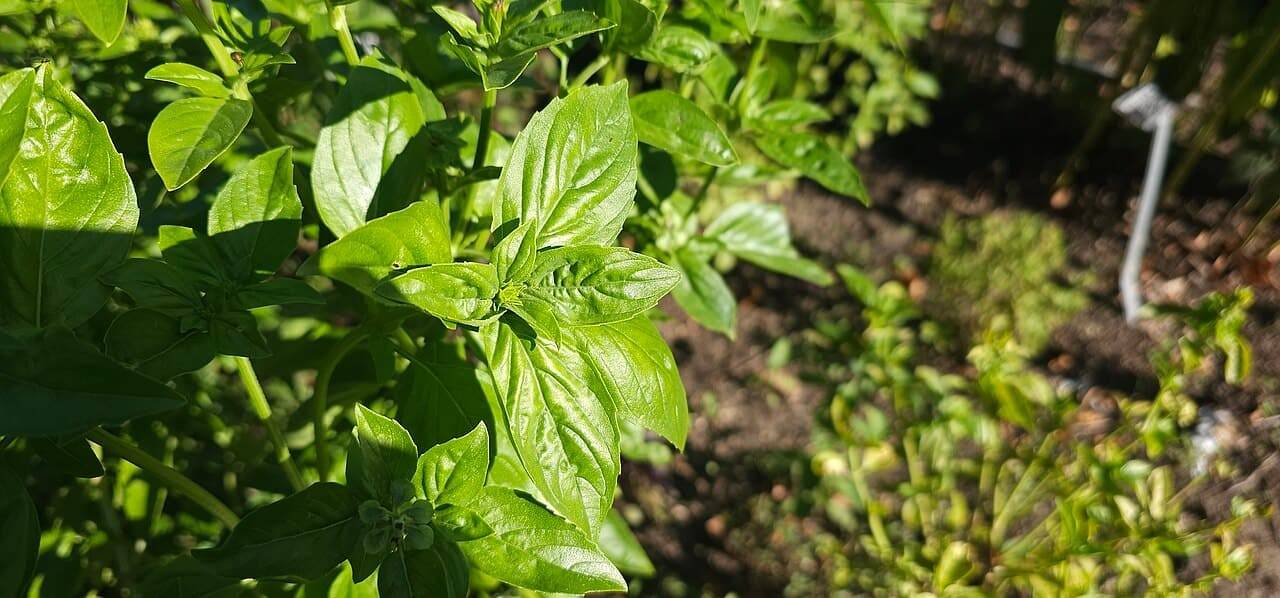
Do not confuse dry roots with a dry surface
A dry top layer can sit above a damp root zone. The opposite can also happen: water may wet part of a container while leaving another area dry. Check more than one clue, including the weight of the pot and moisture below the surface, before deciding which situation you have.
If the plant has genuinely become too dry, respond to that condition and then observe the result. Do not swing immediately to a permanent daily watering schedule. The amount of time between watering depends on the plant, container and conditions. A rule that seemed sensible during hot outdoor weather can become excessive after a move indoors.
Look underneath leaves with patterned yellowing
University of Minnesota Extension's basil downy mildew guide describes yellow areas restricted by major veins, with grey growth on leaf undersides. Infection can begin on lower leaves and move upward. These signs deserve closer attention than a generic “basil needs nitrogen” answer.
If you suspect this disease, keep the plant away from other basil while seeking reliable identification. Minnesota Extension recommends promptly removing plants with downy mildew and notes that products available to homeowners are not effective. Do not experiment with a spray merely because an online image looks similar. Pesticide permission and edible-crop instructions depend on the product and your location.
Review feeding after the moisture and disease checks
Look at the bag or record for the potting mix. Does it already contain fertiliser, and how long has the plant been growing in it? Check any feed you have used, including the stated rate. “A small splash” is hard to compare with the product's instructions and is not a useful basis for deciding to increase it.
Minnesota Extension's home-basil guide treats plant health as a matter of correct diagnosis and growing conditions. Follow an appropriate edible-herb fertiliser label if feeding is indicated. Avoid assuming that a stronger dose will make a stressed plant recover faster, or that one homemade kitchen ingredient can supply whatever the plant lacks.
Use a short decision record
| What you observe | A proportionate next step | What would make you reassess |
|---|---|---|
| A persistently wet root zone | Check drainage and stop watering automatically | Continuing decline despite a suitable moisture level |
| A genuinely dry, light pot | Water appropriately and follow the root zone afterward | Water bypassing the centre or rapid repeated drying |
| Yellow areas with suspicious underside growth | Seek disease identification and separate the plant | Spread to additional leaves or nearby basil |
| Gradual pallor without a clear cause | Review the mix, feeding record and light conditions | Symptoms that do not fit your first explanation |
Use the table as an observation aid, not as a replacement for a plant-health assessment. Several problems can occur together. A plant with damaged roots may also struggle to use nutrients, which is why “yellow means feed” is such an unreliable shortcut.
Judge recovery by the next growth
Mark the date of the change you made and look at the overall trend. An already damaged leaf is not a fair test of whether the next leaves are developing normally. Avoid repeating a treatment simply because the old photograph still looks worse than you hoped.
If the plant continues to decline, send your whole-plant and leaf photographs to a local extension or other qualified plant-diagnostic service, with the watering and growing history. A useful answer depends on that context. The goal is to identify the next reasonable action, rather than collect an ever longer list of remedies for the same yellow leaf.