How to Protect Balcony Plants From Wind
Wind changes moisture loss, plant shape and container stability. Learn how to assess exposure and choose a safer, more manageable balcony planting.

A balcony can be bright, warm and surprisingly difficult for plants because of wind. Air moving around a building can dry a pot quickly, damage tender growth and turn a tall arrangement into an unstable object. The solution is not simply to water more or buy the heaviest pot available. Begin by understanding the exposure, the building's limits and how the plants will be cared for safely.
Watch the space in different conditions
A calm morning does not show you what happens during a windy afternoon. Notice where air funnels between walls, where gusts arrive and which areas remain more sheltered. Observe from a safe position and do not test the space by placing unsecured objects near an edge. A balcony's height and surrounding buildings can make its conditions different from the garden at street level.
Sun and rain matter alongside wind. An overhang may prevent rain from reaching a container even when the weather has been wet. A wall can reflect heat into a sunny corner. Put these observations together before deciding whether a plant described as drought tolerant or sun loving will suit the exact spot.
Check practical and structural limits first
Use the building's rules and appropriate professional guidance for weight, drainage, fixtures and alterations. Wet growing medium, containers and stored water all contribute to the load. Do not add heavy materials or attach a screen to a railing on the assumption that any balcony can safely support the same arrangement.
Keep access routes clear and ensure water does not create a problem for neighboring properties or the building. A plant display should fit the space you are allowed to use. When you are unsure about a structural detail, resolve that before choosing a workaround with extra pots, ballast or improvised supports.
Choose a manageable shape
Compact plants and arrangements with a lower center of gravity can be easier to manage than tall, top-heavy growth in a narrow container. Think about the mature plant, including how much leaf area it may present to gusts. A small nursery plant can become a very different object after a season of growth.
Use plants suited to the local climate and exposure, and check their needs rather than assuming that all tough-looking leaves imply the same tolerance. Start with a limited number so you can learn how the location behaves. It is easier to adjust a few suitable pots than to rescue a crowded display after the first difficult spell of weather.
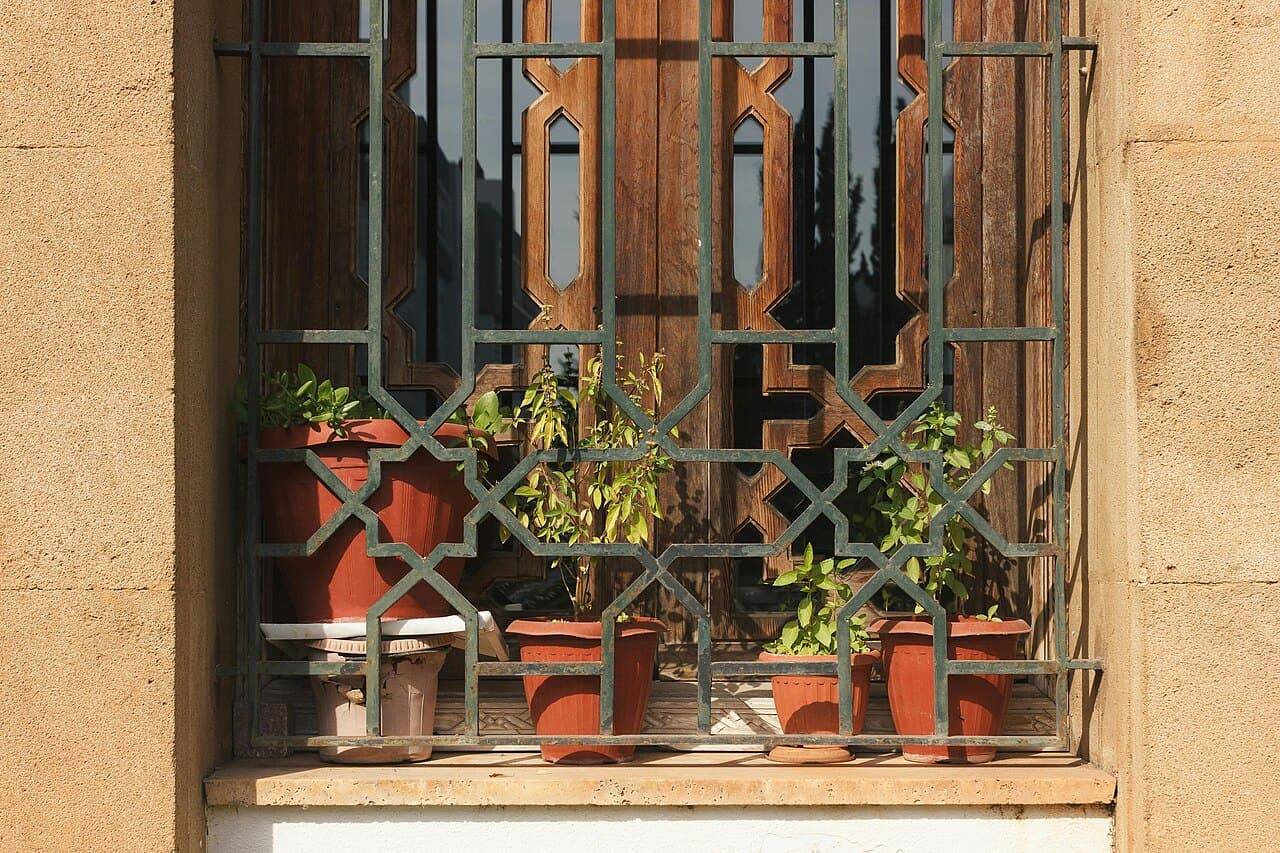
Use shelter thoughtfully
Existing walls or other protected areas may create useful positions, but wind can also become turbulent around a solid barrier. The Royal Horticultural Society notes that appropriately designed slatted or mesh screening can filter wind. Any new screen or fixing still needs to be suitable and safely supported for the building and conditions.
Avoid fastening improvised sheets or large panels where they can catch the wind. Shelter is a design question, not simply a matter of putting any barrier between the plant and the view. A less exposed placement may be the easiest option when permanent changes are not appropriate.
Reassess the watering routine
Wind can increase drying, but watering should still respond to the medium and the plant. Check moisture more frequently during demanding conditions rather than pouring extra water into a pot that is already wet. A plant with damaged roots may look wilted even when lack of water is not the main problem.
Our container-watering guide explains how pot weight and the condition of the mix can help. Check drainage and any collection tray as well. Rainfall, strong wind and a sheltered overhang can each produce different watering needs, even among pots only a short distance apart.
Make containers easy to inspect and maintain
Choose a suitable pot material and enough root space for the intended plant, while respecting weight limits. A very small exposed pot can dry rapidly. A very large container may be difficult to move or inspect safely. The best choice is a workable balance rather than the largest or heaviest option you can find.
Plan how you will reach every plant for watering, pruning and checking stability. Do not rely on leaning over a railing or moving a heavy pot whenever it needs attention. Care should be possible from a stable position, with the arrangement kept securely within the permitted area.
Prepare for changing weather
Have a sensible plan for severe weather based on local advice and the building's requirements. Check unsecured accessories, damaged pots and growth that has become top heavy. Do not wait until gusts are already strong to handle an awkward object near an edge. Smaller decorative items can also create problems if they are left loose.
A successful windy-balcony garden often looks deliberately simple. Plants suit the exposure, containers are stable and manageable, and the care routine responds to conditions. That is a more dependable foundation than trying to reproduce a sheltered garden display in a much more exposed setting.